Photo of Bexis

Three years ago we published a lengthy post, “Stupid Expert Tricks,” detailing several of the other side’s egregious attempts at passing off junk science “experts” as the real thing, along with our side’s trials and tribulations during the course of unmasking these phonies.  Our rogues’ gallery contained:  In In re Zofran (Ondansetron) Products Liability Litigation, 392 F. Supp.3d 179, 181-87 (D. Mass. 2019) (Zambelli-Weiner); In re 3M Bair Hugger Litigation, 924 N.W.2d 16, 19 (Minn. App. 2019) (Augustine); In re Mirena IUD Levonorgestrel-Related Products Liability Litigation (No. II), 341 F. Supp.3d 213, 222-23, 229-32 (S.D.N.Y. 2018) (Etminan); Gerke v. Travelers Casualty Insurance Co., 289 F.R.D. 316, 328-29 (D. Or. 2013) (Painter); McClellan v. I-Flow Corp., 710 F. Supp.2d 1092, 1119-25 (D. Or. 2010) (Matsen); Nelson v. Tennessee Gas Pipeline Co., 1998 WL 1297690, at *4, 7-8 (W.D. Tenn. Aug. 31, 1998), aff’d, 243 F.3d 244 (6th Cir. 2001) (Kilburn); and Wade-Greaux v. Whitehall Laboratories, Inc., 874 F. Supp. 1441, 1559-62 (D.V.I. 1994), aff’d mem., 46 F.3d 1120 (3d Cir. 1994) (Gilbert).

We’ve found another one – this time from talc litigation.

Continue Reading Stupid Expert Tricks Redux
Photo of Rachel B. Weil

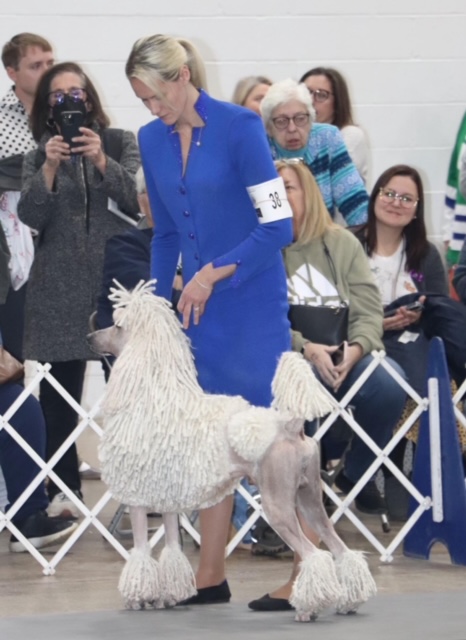
We write on the heels of a long weekend layered with dogs and fun.  The National Dog Show, which you may have watched on TV yesterday, is held about ten minutes from our house, and a fabulous corded Standard Poodle named Joel, who just happens to be “family” (he is the sire of our gorgeous puppy, Luca) won Best of Opposite Sex two days running (and stayed overnight with us).  And two out-of-town handlers we know unexpectedly needed a place to exercise their charges, so we twice got to stand in our back yard while no fewer than seven show dogs, from ten pounds to 150 pounds, swirled around us.  We can’t imagine being much happier.

Layers of good mark today’s case, as well.  Arevalo v. Mentor Worldwide LLC, et al., 2022 WL 16753646 (11th Cir. Nov. 8, 2022), is a decision on the appeal of a Northern District of Florida decision we liked very much.  Arevalo is a pelvic mesh case.  The plaintiff alleged that mesh devices implanted to treat her stress urinary incontinence and pelvic organ prolapse caused her to undergo mesh removal surgery and to suffer a familiar litany of injuries.  The plaintiff’s general and specific causation expert was the ubiquitous Dr. Bruce Rosenzweig.  Among numerous other motions, the defendant moved to exclude Dr. Rosenzweig’s specific causation opinion as unreliable because Dr. Rosenzweig did not perform an adequate differential diagnosis.  The court granted the motion and excluded the specific causation opinions, holding that Dr. Rosenzweig “did not explain how he systematically and scientifically ruled out the other potential causes for the plaintiff’s symptoms.  Arevalo, 2022 WL 1673646 at *4.  The court then granted summary judgment for the defendant because the plaintiff could not reach the jury without expert specific causation testimony.  The plaintiff appealed to the Eleventh Circuit, and today’s decision is the result. 

Continue Reading Eleventh Circuit Affirms Exclusion of Flawed “Differential Diagnosis” in Pelvic Mesh Case
Photo of Rachel B. Weil

For the first time in two years, we write from the confines of our office in downtown Philadelphia.  While we loved the full-time “work from home” regime, we have fondly re-embraced the near-forgotten view from our 30th-floor window, along with our Dancing Barney doll, our RBG action figure, and our solar-powered effigy of

Photo of Bexis

It more or less came out of nowhere, but we’re now watching what’s going on in the Martinez v. Coloplast Corp., No. 2:18-CV-220-JTM-JEM (N.D. Ind.), pelvic mesh case.  Recently, we’ve come across a number of interesting, and generally favorable, Fed. R. Civ. P. 702 expert gatekeeping decisions bearing that caption, as Martinez approaches trial

Photo of Eric Alexander

After eschewing our blogging duties during a very long trial—followed by short deliberations and a verdict for the good guys—we are back at it.  Normally, a significant criterion in how we select a case for a post is the length of the decision—the shorter, the better for our normally busy work lives.  After trial, there