Photo of Stephen McConnell

In preparation for our OTC panel next week at ACI-NY, we have kept our eyes open for any OTC cases that raise interesting issues.  Today’s case, Rooney v. Procter & Gamble Co., 2022 U.S. Dist. LEXIS 210218 (E.D. La. Nov. 21, 2022), involves a claim by the plaintiffs that a woman developed triple negative breast cancer as a result of using an antiperspirant that she asserts contained benzene.  

The assertion that benzene was in the antiperspirant rested on testing by Valisure, an analytical pharmacy.   Some of you have heard of a Valisure before, as its testing, and results allegedly showing contamination, have been relied upon by plaintiffs in other mass torts.  Valisure calls itself “the pharmacy that checks.”  Perhaps we are cynical, but we think of a different sort of checks when we see a purported independent outfit that seems to cooperate closely with plaintiff lawyers. Here, Valisure ran tests on batches of the antiperspirant and came up with concentrations of benzene significantly higher than levels recommended by OSHA.  Valisure filed a Citizen’s Petition with the FDA seeking a recall of antiperspirant batches containing too much benzene.  (Sound familiar?) The FDA had not responded to the Citizen’s Petition.  The defendant voluntarily implemented a recall of certain batches of the antiperspirant.  

Before the court was the defendant’s motion to dismiss the plaintiffs’ second amended complaint.  The plaintiffs alleged that the defendant violated the Louisiana Products Liability Act by selling antiperspirants without issuing adequate warnings.  The plaintiffs also alleged that the defendant was liable under theories of negligence, gross negligence, strict liability, and “fault,” and that the defendant violated the FDCA.  Some of those claims seem weird (some of what’s missing also seems weird, but it’s not our job to help plaintiffs author complaints – our criticisms are strictly destructive), but remember, we’re in Louisiana.  Not that we’re complaining.  The people are fun, the food is great, and did we mention that the Judge in this case dismissed the second amended complaint?  

Continue Reading E.D. Louisiana Dismisses Antiperspirant/Benzene Claims
Photo of Michelle Yeary

We have had occasion over the years to opine on cases involving allegations against sales representatives who are present in the operating room—a not uncommon practice when medical devices are being used.  While the practice is not uncommon, what is rare are instances where a sales representative participates in the surgery.  Rare, but not non-existent.  Where the line is drawn between presence and participation, and possibility liability or not, is extremely fact sensitive.  And as the court in Owens v. Boston SCI Corp. concluded, in the absence of facts, conclusory allegations of participation are not enough. 2022 U.S. DIST. Lexis 212427, *7 (E.D. Mo. Nov. 23, 2022).

 Plaintiff underwent surgery involving implantation of a pelvic mesh medical device.  Plaintiff alleged complications following surgery and filed a lawsuit against the manufacturer alleging design defects and against one of the manufacturer’s sales representatives for failure to warn both plaintiff’s surgeon and plaintiff.  The manufacturer removed the case to federal court alleging the sales representative, who was not diverse to plaintiff, was fraudulently joined.  Plaintiff moved to remand.

Continue Reading Sales Representative’s Presence in Operating Room Not Enough to Beat Fraudulent Joinder
Photo of Bexis

Three years ago we published a lengthy post, “Stupid Expert Tricks,” detailing several of the other side’s egregious attempts at passing off junk science “experts” as the real thing, along with our side’s trials and tribulations during the course of unmasking these phonies.  Our rogues’ gallery contained:  In In re Zofran (Ondansetron) Products Liability Litigation, 392 F. Supp.3d 179, 181-87 (D. Mass. 2019) (Zambelli-Weiner); In re 3M Bair Hugger Litigation, 924 N.W.2d 16, 19 (Minn. App. 2019) (Augustine); In re Mirena IUD Levonorgestrel-Related Products Liability Litigation (No. II), 341 F. Supp.3d 213, 222-23, 229-32 (S.D.N.Y. 2018) (Etminan); Gerke v. Travelers Casualty Insurance Co., 289 F.R.D. 316, 328-29 (D. Or. 2013) (Painter); McClellan v. I-Flow Corp., 710 F. Supp.2d 1092, 1119-25 (D. Or. 2010) (Matsen); Nelson v. Tennessee Gas Pipeline Co., 1998 WL 1297690, at *4, 7-8 (W.D. Tenn. Aug. 31, 1998), aff’d, 243 F.3d 244 (6th Cir. 2001) (Kilburn); and Wade-Greaux v. Whitehall Laboratories, Inc., 874 F. Supp. 1441, 1559-62 (D.V.I. 1994), aff’d mem., 46 F.3d 1120 (3d Cir. 1994) (Gilbert).

We’ve found another one – this time from talc litigation.

Continue Reading Stupid Expert Tricks Redux
Photo of Bexis

Several of your Reed Smith bloggers are making plans to attend ACI’s annual Drug and Medical Device Litigation conference, as they celebrate the 27th anniversary of the event. We’re looking forward to great content and networking opportunities – and the chance to catch up with some of our loyal readers!

Since we’d like to see you at ACI, we wanted to share that the good people at ACI asked the blog to be a media sponsor this year – and are offering a special registration discount for the conference for the blog’s readers. Make sure to use the code D10-999-DDLB when you register. You’ll save 10 percent.

We look forward to seeing you!

Photo of Rachel B. Weil

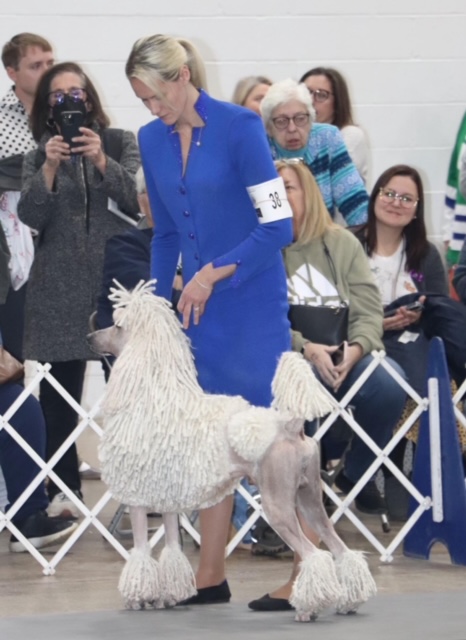
We write on the heels of a long weekend layered with dogs and fun.  The National Dog Show, which you may have watched on TV yesterday, is held about ten minutes from our house, and a fabulous corded Standard Poodle named Joel, who just happens to be “family” (he is the sire of our gorgeous puppy, Luca) won Best of Opposite Sex two days running (and stayed overnight with us).  And two out-of-town handlers we know unexpectedly needed a place to exercise their charges, so we twice got to stand in our back yard while no fewer than seven show dogs, from ten pounds to 150 pounds, swirled around us.  We can’t imagine being much happier.

Layers of good mark today’s case, as well.  Arevalo v. Mentor Worldwide LLC, et al., 2022 WL 16753646 (11th Cir. Nov. 8, 2022), is a decision on the appeal of a Northern District of Florida decision we liked very much.  Arevalo is a pelvic mesh case.  The plaintiff alleged that mesh devices implanted to treat her stress urinary incontinence and pelvic organ prolapse caused her to undergo mesh removal surgery and to suffer a familiar litany of injuries.  The plaintiff’s general and specific causation expert was the ubiquitous Dr. Bruce Rosenzweig.  Among numerous other motions, the defendant moved to exclude Dr. Rosenzweig’s specific causation opinion as unreliable because Dr. Rosenzweig did not perform an adequate differential diagnosis.  The court granted the motion and excluded the specific causation opinions, holding that Dr. Rosenzweig “did not explain how he systematically and scientifically ruled out the other potential causes for the plaintiff’s symptoms.  Arevalo, 2022 WL 1673646 at *4.  The court then granted summary judgment for the defendant because the plaintiff could not reach the jury without expert specific causation testimony.  The plaintiff appealed to the Eleventh Circuit, and today’s decision is the result. 

Continue Reading Eleventh Circuit Affirms Exclusion of Flawed “Differential Diagnosis” in Pelvic Mesh Case
Photo of Stephen McConnell

At ACI’s December session in New York we will be part of a panel discussion on product liability actions against over the counter (OTC) medicines.  Such lawsuits are certainly not new, but some aspects of them are.  For example, so called “independent” laboratories have played an outsized, perhaps inappropriate, role in driving such lawsuits.  In addition, proof of use problems abound with OTC products.  Without prescription records, can the mere say-so of a plaintiff carry the day on usage, or should there be corroboration in the form of bottles, photographs, receipts, loyalty program records, etc.?  Scientific issues of medical causation can be very different with OTC drugs as compared with rX versions. There are usually different doses and durations. Warning causation can also take a very different shape in OTC world.  The absence of a learned intermediary (though, to be sure, sometimes there is a learned intermediary advising the patient to take an OTC medicine – what to do about that?) makes it easier for patients to engage in misuse.  At the same time, alleged injuries from OTC medicines can be every bit as profound as from prescription drugs.  Think of all those terrible SJS/TEN cases.  

And then there is the defense of preemption.  As we’ve written about several times before (here, for example), there is pretty broad express preemption of non-product liability actions against OTC medicines.  Now after all that wind-up, we come to today’s case, Truss v. Bayer Healthcare Pharmaceuticals Inc., et al., 2022 WL 16951538 (S.D.N.Y. Nov. 15, 2022), which is a defense favorable OTC drug preemption case involving a purported economic loss class action against a sunscreen manufacturer. The plaintiffs filed a putative class action claiming that the sunscreen manufacturers falsely marketed the sunscreen as being hypoallergenic and gentle for skin even though the sunscreen actually contained benzophenone, which they allege to be hazardous degradation product.  (Yes, this is yet another case in which the plaintiff alleges harm from chemical breakdown/degradation substances in a product.  Perhaps a new chapter in the plaintiff drug and device playbook is being written.) The plaintiffs asserted claims under California and New York consumer protection laws, as well as common law theories of unjust enrichment and breach of warranty.  The defendant filed a motion to dismiss.  

Continue Reading SDNY Dismisses Sunscreen Case Based on Preemption
Photo of Bexis

The Supreme Court’s latest foray into the constitutional thicket of personal jurisdiction, Mallory v. Norfolk Southern Railway, No. 21-1168 – to decide whether states can force corporations to “consent” to general personal jurisdiction via foreign corporation registration statutes − was orally argued on November 8, 2022.  The transcript is available here.  Since Bexis has been involved (as amicus curiae) in Mallory since the trial court’s favorable decision (which he made sure was on Westlaw and Lexis) was first appealed in Pennsylvania, we thought we’d review the highlights of the oral argument.

Continue Reading Mallory Oral Argument – Litigation Tourists’ Last Stand?
Photo of Bexis

We’ve written a number of posts on whether, in various jurisdictions across the United States, software and other forms of electronic/magnetic code can be considered to be “products” for purposes of product liability – usually strict liability.  As befits the decentralized product liability litigation landscape in the United States, there is considerable uncertainty, but most decisions, as well as both the Second and Third Restatements of Torts, have determined that incorporeal items composed of electronic bytes are not “products.”

Continue Reading Software as a Product – The European Union Goes There
Photo of Eric Alexander

Drug manufacturers are not insurers against injury from or while taking medications.  Neither are distributors or pharmacies.  Just because a patient experiences a complication while taking a medication, including the very condition the medication is supposed to help prevent, does not mean that some person or entity should be liable to the patient for her injuries.  Sometimes, there is no fault or liability to be found.  We do not think these are controversial principles, but we find that they apply to more than a few of the cases giving rise to the decisions about which we expound.

We also find that missing facts from complaints can speak volumes.  Similarly, when a plaintiff waits until the third complaint to add case-specific factual allegations that should have been there from the start or when factual allegations pop in and out of serial amendments you have to question the basis for those allegations.  At least we do.  As inveterate curmudgeons, we tend to think bare-bones, boilerplate allegations are unlikely to be supported if the case gets to the merits.  Of course, part of the game for some plaintiffs is to get past pleadings and hope the defendants opt for settlement instead of paying the costs of defense.  The Twombly and Iqbal decisions tightened pleading standards, and thus improved the chance of success on motions to dismiss in federal court and some states have followed along.  The hole, and source of our periodic grumbling, is how often dismissals are without prejudice and accompanied by leave to amend.  Too often, it seems that the provision in Fed. R. Civ. P. 15 that courts “should freely give leave when justice so requires” leads to leave even when it should be obvious that amendment will be futile, not to mention a waste of judicial resources.

Continue Reading Five Strikes Needed To Dismiss A Questionable Case
Photo of Bexis

The recent defense win in Dains v. Bayer HealthCare LLC, 2022 WL 16572021 (N.D.N.Y. Nov. 1, 2022), demonstrates why many plaintiff-side counsel are well-advised to steer away from cases involving PMA medical devices.  Between federal preemption and TwIqbal, not one of the plaintiff’s “seventeen separately enumerated causes of action” escaped the defendant’s motion to dismiss.  Id. at *3.

Continue Reading Preemption and Pleading Send Plaintiff Packing